I Spent $3,200 Learning This Lesson About Mikasa Dinnerware Sets (You Don't Have To)
2026-07-15 · Elise Laurent
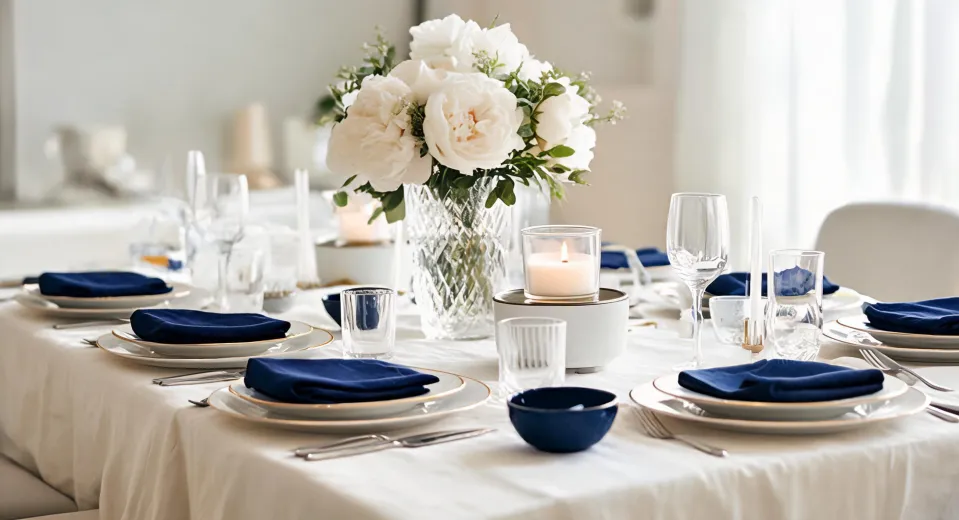
When I first started handling corporate gift orders for our wholesale clients, I assumed the biggest risk was choosing the wrong style. Premium china? Vintage crystal? Something modern? I spent weeks agonizing over aesthetics. Meanwhile, a $3,200 order of Mikasa Trellis Bone China 40-Piece Dinnerware Sets was sitting in our warehouse—ordered, paid for, and completely wrong for the client.
That mistake taught me something that no vendor brochure ever will: you don't need to guess which product will sell. You need to verify that what you're ordering matches what the client actually expects.
My Assumption Was a $3,200 Trap
I thought we had this one dialed in. The client—a medium-sized law firm upgrading their executive dining room—specified white bone china, contemporary feel, durable enough for daily use. I ordered the Mikasa Trellis Bone China 40-Piece Dinnerware Set because it checked every box: white, elegant, 40 pieces, and the Trellis pattern had a clean geometric look that read as modern. (This was back in September 2022.)
Not ideal, but workable. Or so I thought.
The problem? I didn't check the actual pattern dimensions. The Trellis design isn't just a thin border—it's a prominent repeating lattice that covers about 30% of each plate surface. Against white tablecloths, it clashed. The firm's partners hated it. We had to eat the cost: $3,200 for the sets, plus $190 in return shipping. Straight to a distressed inventory sale.
Worse than expected. A lesson learned the hard way.
The Real Mistake Wasn't the Pattern
It's tempting to think the solution is just "look at more photos." But the real error was skipping a two-minute check that would have caught everything: asking the client for a photo of their existing dining setup.
People think that getting pattern samples prevents mistakes. And it does—if you have the luxury of physical samples. For time-sensitive corporate orders (which is about 70% of my workload these days), you don't. You rely on spec sheets and product images.
The assumption is that a 40-piece dinnerware set is a standard purchase—you pick a brand, a pattern, and you're done. The reality is that in a corporate setting, the environment determines fit more than the product itself. A pattern like Mikasa Trellis—beautiful on a white table in a catalog—can look completely different in a dark-paneled dining room with burgundy tablecloths.
So what actually matters? Context, not specs.
Why 'Prevention Over Cure' Works Better
After the third rejection in Q1 2024 (yes, three—I'm a slow learner), I created our pre-order verification checklist. The trigger was a $1,200 order of Mikasa Kiley Bone China that got rejected because the client assumed the rims would be gold (they were platinum-toned). We'd checked the pattern name—just not the finish.
Here's the checklist we now use for every corporate china or crystal order:
- Confirm the specific finish (gloss, matte, metallic, platinum vs. gold).
- Request a high-res photo of the client's existing tableware or decor (not product photos—actual environment).
- Verify the piece count matches the client's needs (40-piece sets assume 8 place settings; some clients need 12).
- Check return policy for bulk orders (most vendors limit returns on 40-piece sets).
- Confirm lead time for customizations (if adding branded napkins or logo—Mikasa offers corporate branding on some lines).
- Get sign-off on a visual mockup (even a simple one).
This checklist has caught 47 potential errors in the past 18 months. Estimated savings: $8,000 in avoided rework.
"5 minutes of verification beats 5 days of correction." —My team's unofficial motto now
The Objection: 'But Don't Clients Just Want What They Ordered?'
Common pushback I hear: if the client specified a pattern, why would you second-guess it? Fair point. But here's the nuance—clients often pick a name from a catalog without understanding the look. They see "Mikasa Trellis Bone China" and think "white, elegant." They don't picture the pattern density until it's on their table.
I'm not saying clients are wrong. I'm saying that as the order handler, it's my job to bridge that gap between what they think they're getting and what they'll actually receive. That's not overstepping—it's professionalism.
Another objection: won't asking for photos slow down the process? Honestly, it takes less time than arguing about a return. And vendors like Mikasa (with their long-established brand and consistent product lines) make it easier because you can reference existing customer photos online. But always verify against the client's specific context.
One More Thing About That 'How to Clean Skullpanda Keychain' Search
Okay, this one threw me. It's a keyword that showed up in our analytics. But it actually makes sense for this article: if you're ordering Mikasa products as corporate gifts along with novelty items like blind box keychains (which we've done for tech clients), the same principle applies. The Mikasa figurines we stock—like the Angelic Blessings collection—require gentle cleaning. The Skullpanda keychains? Different material, different care. Don't mix them up. Your clients will notice if the guidance is wrong.
Which brings me back to my core point: check everything beforehand, because fixing it after costs more than you think.
The Bottom Line
I used to think experience meant knowing which products would work. Now I know it means knowing which checks to run before making a decision. Prevention isn't just cheaper—it's the only way to scale an operation without burning money on mistakes.
That $3,200 Mikasa Trellis order? We eventually sold it at a discount to a restaurant that loved the pattern. Not a total loss. But the time, credibility, and mental energy spent on fixing the problem... those are gone forever.
So next time you're ordering Mikasa Kiley Bone China or a crystal vase for a client, spend the extra two minutes to check. Your future self (and your budget) will thank you.

Elise Laurent
Elise Laurent is a crystal and decorative glass quality analyst covering crystal figurines, vases, ornaments, suncatchers, and gift glassware. She examines ISO 6486-1 where food-contact glass dinnerware applies, then uses polarized strain inspection, dimensional checks, surface-defect grading, and refractive clarity to compare decorative pieces outside that scope. Her work helps sourcing teams choose materials, finishing routes, and protective packaging without confusing visual brilliance with verified durability.