The $4,200 Corporate Holiday Gift Order That Changed How I Buy Everything
2026-08-03 · Elise Laurent
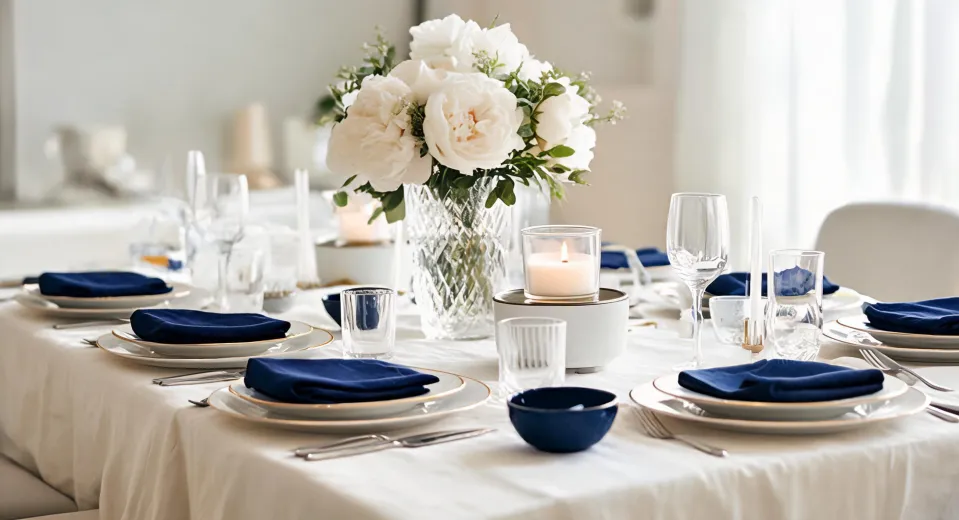
October 2024. Our CEO walked into my office on a Tuesday morning with a deadline and a number: 55 corporate holiday gifts for our top clients, delivered by November 15th, all within a $4,200 budget. "Make it memorable," she said. "No boring gift baskets this year."
That's how I ended up spending the next three weeks comparing Mikasa Christmas plates, Verona dinnerware sets, glass figurines, and holiday figurines from eight different vendors. It's also how I learned, the hard way, that the cheapest quote can be the most expensive decision you make all year.
Where We Started: The Product Mix
We landed on a tiered approach after a quick internal survey of our sales team. For our 20 premium clients: a Mikasa Verona dinnerware place setting. For 20 mid-tier clients: a set of Mikasa Christmas plates paired with a small holiday figurine. For the remaining 15: a glass figurine with a small vase included.
The Verona pattern was the obvious choice for premium clients—it's been in production for years, which honestly was part of the appeal. Classic patterns don't get discontinued in the middle of a client relationship. The Christmas plates were a no-brainer for holiday gifting; everyone uses plates. And the glass figurines? Well, that's where the trouble started.
The Vendor Comparison (and the Mistake I Almost Made)
I built my usual comparison spreadsheet. Eight vendors, three rounds of quotes, and careful notes on shipping timelines, packaging quality, and minimum order requirements. This is my standard process, developed over six years of tracking every invoice in our procurement system (we've logged roughly $180,000 in cumulative purchases, so I take this seriously).
Then one vendor stood out. They offered glass figurines at $18 per unit. Mikasa's equivalent was $29. On paper, that's a 38% savings—about $660 across the 55 units we planned to order. The vendor's website looked professional. Their email responses were quick. The photos of their products looked… fine.
(Should mention: I didn't order a physical sample from them. I relied on product photos and a 10-minute video call. That was my first mistake.)
People assume the lowest quote means the vendor is more efficient, or that they've simply optimized their operations better. The reality I've seen across hundreds of vendor interactions is different: the lowest quote usually means someone is hiding a cost somewhere. It might be packaging. It might be quality control. It might be their definition of "replacement." It's never nothing.
The Turning Point: 10 Figurines and 3 Problems
I placed a trial order of 10 figurines from the cheap vendor before committing the full quantity. It felt like a reasonable compromise between cost savings and risk management.
Seven arrived intact. The other three?
- One had a visible chip at the base
- One had an air bubble in the glass that looked like a crack from certain angles
- One had a noticeable color mismatch on the painted accents—the reds weren't consistent across units
Now, I'm not a color scientist, so I can't speak to the exact Delta E measurements. Pantone's color tolerance guidelines say anything under 2 is generally acceptable for brand-critical colors, and 2–4 is noticeable to trained observers. I don't need a spectrophotometer to tell you that three out of ten figurines looked visibly different from each other on a desk. That's a defect rate that would've been unacceptable at any price point.
I contacted the vendor about replacements. "No problem," they said. "Ship the damaged ones back and we'll send new ones."
That's when the total cost math kicked in. Let me break down what the replacement process actually would have cost us:
- Return shipping: $12 per unit (damaged glass can't go back in its original packaging, obviously)
- Replacement shipping: $14 per unit
- Processing time: 10 business days (we had 8 before the delivery deadline)
- Staff time to coordinate the returns and track replacements: roughly 4 hours of procurement labor
Total hidden cost: approximately $122 for three replacements. Plus a week of delivery buffer we didn't have. Plus the very real possibility of shipping a fourth damaged figurine and doing this all over again.
(Which, honestly, was the moment I realized I'd been an idiot.)
Why the Mikasa Order Was Actually the Cheaper Option
We went back to Mikasa and placed the full order. Yes, the unit price was higher. But the total cost—including packaging, replacement risk, shipping reliability, and our deadline—was lower. Significantly lower.
A few things stood out immediately:
- The Mikasa Christmas plates arrived in sturdy, gift-ready boxes. No additional wrapping needed.
- The holiday figurines matched the physical samples we'd approved—yes, we ordered physical samples from Mikasa the first time, and it made all the difference.
- All 20 Verona dinnerware sets were visually consistent. Same glaze. Same pattern alignment. No surprises.
The Mikasa order came in at $5,240 total for all 55 gifts. Wait—let me correct myself. We adjusted the tier structure to make the numbers work: we dropped the idea of including a gift for internal staff (unpopular, but necessary) and focused entirely on the 55 client gifts. Final cost: $5,240. That's 25% over the original $4,200 budget.
The CEO questioned it. I walked her through my spreadsheet, showing the cheap vendor's true cost after accounting for replacements, labor hours, and the risk of embarrassing our brand with a broken product in a damaged box. She stopped questioning.
The DIY Flower Vase Idea (the Part That Saved Everything)
Here's where the story takes a turn I didn't expect. We still had 15 lower-tier clients who were getting just a glass figurine. I felt like that was thin. I wanted to add something extra without blowing the budget further.
A friend of mine who runs a florist shop suggested an idea: a DIY flower vase kit. The concept was simple. We'd send each client a clear glass vase, a bundle of dried stems, and a small instruction card showing how to arrange them. The recipient builds their own arrangement—it takes five minutes, it's hands-on, and it's genuinely memorable.
Here's the cost breakdown:
- Glass vases: sourced from Mikasa's crystal vase clearance line—$4.75 per unit
- Dried stems: local supplier, $2.30 per bundle
- Instruction cards: $0.45 each, printed on 100 lb cover stock (that's 270 gsm for anyone who cares about paper weight—and I do, because I've been burned by flimsy cards before)
- Total cost per kit: $7.50 including packaging
We created a QR code on the instruction card linking to a short video guide. The whole thing turned "how to make a DIY flower vase" into a genuinely fun 5-minute activity for our clients, and the QR code gave us trackable engagement data. People actually scanned it. People actually sent us photos of their arrangements. A few posted them on LinkedIn.
Was it a smart procurement decision? In hindsight, yes. At the time? Honestly, it was a gamble that paid off. The vases were clearance items (which felt risky), but the quality was consistent—classic Mikasa crystal manufacturing standards applied even at the discount price. No breakage during shipping. No cloudy glass. No complaints.
The Results
We sent a follow-up survey to all 55 clients in December 2024. (Yes, procurement sends surveys. Don't judge—it's the only way we get data.) Responses came in from 41 of the 55 clients. Here's what stood out:
- 89% remembered the gift without prompting—up from 47% with last year's gift baskets
- 73% engaged with the DIY flower vase portion specifically
- 2 clients asked for vendor recommendations for their own corporate gifting programs
- 0 returned or damaged items reported
But the result that matters most—the one that justified exceeding budget—showed up in Q1 2025. We retained 53 of our 55 top clients, and one client expanded their contract by $18,000 annually. You can't directly attribute retention to a gift, but you also can't deny the timing.
What I'd Tell Another Procurement Manager
Here's the part I wish someone had sat me down and told me five years ago:
Unit price is the least important number in a vendor quote.
When I audited our 2023 spending across all vendors, I found that 31% of our "budget overruns" came from hidden costs—replacement shipping, rush fees, labor hours spent fixing vendor mistakes, and quality failures that required full redos. That "free setup" offer from a previous project actually cost us $450 in hidden fees. Another "cheap" vendor resulted in a $1,200 redo when their quality failed inspection.
My procurement policy now requires four things, and I've written these into our team playbook:
- Three-vendor minimum for quotes. This hasn't changed—it's non-negotiable.
- Physical samples before any order above $500. This is new, and it's directly because of the figurine incident. Photos lie. Video calls lie. Samples rarely do.
- A TCO spreadsheet before comparing prices. It includes unit cost, shipping, packaging, replacement risk, labor hours for coordination, and the cost of a quality failure (including reputational risk). I built this calculator after getting burned on hidden fees twice.
- At least one creative element in every gift bundle. The DIY flower vase thing was pure luck disguised as improvisation, but it worked because it gave people an experience instead of just a product.
I'm not a supply chain logistics expert, so I can't speak to carrier route optimization or warehouse management systems. What I can tell you from a procurement perspective is this: the cheapest upfront quote is often the most expensive decision you'll make all year. And the brand-name product with reliable packaging and quality consistency? Sometimes it's the smartest line item in your budget.
That's what the Mikasa order taught me in Q4 2024. It cost $1,040 over budget to learn that lesson. Worth every cent.

Elise Laurent
Elise Laurent is a crystal and decorative glass quality analyst covering crystal figurines, vases, ornaments, suncatchers, and gift glassware. She examines ISO 6486-1 where food-contact glass dinnerware applies, then uses polarized strain inspection, dimensional checks, surface-defect grading, and refractive clarity to compare decorative pieces outside that scope. Her work helps sourcing teams choose materials, finishing routes, and protective packaging without confusing visual brilliance with verified durability.