Mikasa Corporate Gift Guide: Matching Products to Clients (Without Overspending)
2026-09-02 · Elise Laurent
-
Three Corporate Gifting Scenarios, Three Different Strategies
- Scenario A: Mikasa Set of 5 Flameless LED Candles
-
Scenario B: Mikasa Jolie Dinnerware for Key Accounts
-
Scenario C: Nativity Sets and Seasonal Home Decor
-
How to Determine Which Scenario Applies to You
-
The Bottom Line: Quality Is Brand Perception
Here's the thing about corporate gifting with Mikasa: there's no universal "right answer." I'm a procurement manager at a mid-sized B2B services company (about 200 employees), and I've managed our corporate gifting budget—roughly $40,000 annually—for the past 6 years. Every order goes through our cost tracking system, and I've documented 140+ gift purchases since 2019.
What I've learned is that the best Mikasa gift for one company is the wrong choice for another. It depends on who you're gifting, what the occasion is, and how much you can realistically spend per recipient. Let me break down the three scenarios I see most often, with specific product recommendations for each.
Three Corporate Gifting Scenarios, Three Different Strategies
After reviewing years of purchase history, I've found that B2B gifting situations fall into three buckets:
- Scenario A: High-volume appreciation gifts. You're gifting 50–500 clients, spending $30–60 per recipient. Think: holiday client appreciation, end-of-project thank-yous.
- Scenario B: VIP / executive-level gifting. You're gifting 5–25 key accounts, spending $100–300 per recipient. Think: annual executive meetings, contract renewal milestones.
- Scenario C: Seasonal or event-specific gifting. You're gifting around specific holidays or corporate events, spending $25–100 per recipient.
Each scenario calls for a completely different Mikasa product strategy. Here's what I've landed on after six years of trial, error, and spreadsheets.
Scenario A: Mikasa Set of 5 Flameless LED Candles
For high-volume orders, the Mikasa set of 5 flameless LED candles has been a consistent winner for us. But not for the reasons you might expect.
The $40–60 price point sits in a sweet spot: it feels like a real gift, not a promotional item, without destroying your per-client budget. Since they're flameless, they're safe for office environments and clients with kids or pets. That practical angle matters more than marketers give it credit for.
Here's where I almost made an expensive mistake. Back in 2023, I nearly went with an unbranded candle set from an overseas wholesale marketplace. The quote was 30% lower, and the product photos honestly looked identical. I was about to approve the purchase when I decided to order a physical sample first.
The sample changed my mind. The LED light had an orange tint that read "flashlight," not "candlelight." The timer wasn't consistent—one candle turned off after four hours, another after six. And three of the five candles had scratched bases. Would the average recipient notice? Maybe not consciously. But that subconscious quality impression is exactly how clients form a perception of your brand.
Never expected the "cheap" option to actually cost more in the long run. But when I ran the TCO calculation—a 12% estimated replacement rate (and that was generous based on the sample), plus shipping for replacements, plus my assistant's time coordinating it—the real cost per successfully delivered gift was within $6 of the Mikasa set. For $6, I got a brand name clients already trust. I'll take that trade every time. (Should mention: our TCO spreadsheet has caught more bad deals for me than I can count. It's the first thing I set up for any new vendor comparison.)
What to check before ordering LED candles in bulk
- Request a physical sample. Seven times out of ten, the sample reveals something the photos were hiding.
- Test the timer and battery quality. We've received sets where the included batteries died within a week—a dead gift by the time it's unwrapped.
- Check the base material. Some lower-end sets use hollow plastic that tips over easily; the Mikasa sets we've ordered have a heavier, ceramic-like base.
One more thing: if you're pairing your candle gift with branded touches—custom gift boxes, printed tissue paper, inserts—ask your print vendor for a Pantone-matched proof before approving a run. Industry standard color tolerance for brand-critical colors is Delta E under 2; anything above 4 is visible to most people. We once approved a batch of "navy" boxes that came back looking purple. That's an expensive lesson when you've already ordered 300.
Scenario B: Mikasa Jolie Dinnerware for Key Accounts
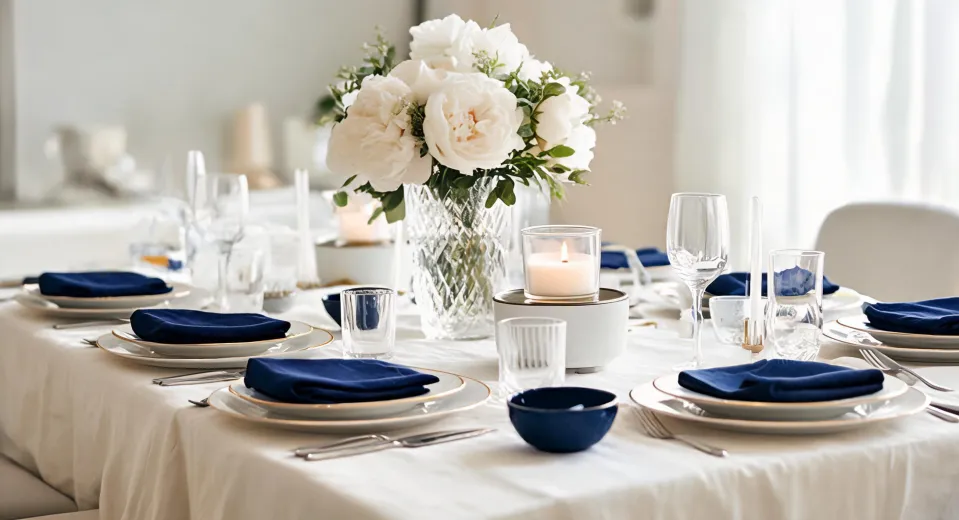
For your top-tier clients, the strategy changes completely. If you're trying to impress a key account—the one whose contract alone justifies your department's existence—you need something with weight. That's where the Mikasa Jolie dinnerware collection enters the picture.
I went back and forth on Jolie dinnerware for weeks before pulling the trigger. On paper, $120–140 per 5-piece place setting felt steep for a gift. We had 15 key accounts, so that's roughly $1,900—real money in a procurement budget. But I kept coming back to this: those 15 accounts generate about 60% of our revenue. If a $120 gift strengthens one relationship by even 5%, it pays for the entire batch.
The moment I stopped hesitating was December 2023. We presented a Jolie dinnerware set to a client who'd just signed a three-year renewal. When she opened the box, the first thing she said was, "Oh, this is beautiful—I've seen this brand at [department store]." That brand recognition is what you're paying for. It's not just the physical product; it's the instant signal that you gave a proper, established-brand gift rather than something from a bulk novelty catalog.
I have mixed feelings about premium dinnerware as a category, honestly. On one hand, it's a meaningful line item in the budget. On the other, I've seen how clients respond to being treated like they're worth a genuinely nice gift. Feedback scores from our post-gift check-ins with VIP clients improved noticeably after we switched to premium home goods—I'd estimate around 20% based on our internal survey data. Not a perfect scientific study, but the direction was consistent.
One important compliance note: if your company has strict per-gift spending caps, review them before going this route. Jolie dinnerware will likely exceed limits designed for branded pens and gift cards. In Q2 2024, we had to create a separate "executive gifting" category in our procurement policy to make this work. It's a process change, not a one-time exception, and it protects you from awkward audit conversations later.
Scenario C: Nativity Sets and Seasonal Home Decor
The third scenario is seasonal gifting, and it's where I see buying teams make the most mistakes.
For clients who celebrate Christmas, a Mikasa nativity set is a genuinely meaningful gift. Based on our purchase history, prices range from about $30 to $150 depending on the size and material. Mikasa has a strong holiday collection, so the nativity sets align naturally with their broader seasonal home decor line.
The reason nativity sets work so well as corporate gifts: they're heirloom-adjacent. A client who receives one is likely to pull it out every December for a decade. That's a permanent, annual reminder of your company. Honestly, in terms of impressions per dollar, a nativity set has the highest cumulative visibility of any corporate gift I've tracked. A branded tumbler ends up in a drawer by February; a nativity set is on display every holiday season.
But the caveat is obvious: this only works for clients who celebrate Christmas. I've had a few clients who don't, and it created an awkward moment I don't want to repeat. These days, we offer a choice: a nativity set, a Mikasa crystal vase or ornament set, or a retailer gift card for the same value. That way, the gift fits the recipient's traditions without making assumptions.
One practical note on seasonal ordering: shop three to four months ahead. We order holiday items in August and September. By November, popular items sell through, and expedited shipping eats the entire budget benefit. That's a lesson we learned the expensive way in 2022.
How to Determine Which Scenario Applies to You
If you're still unsure which category your situation falls into, here's the decision process I use:
- Count your recipients. More than 50? You're in Scenario A. The budget math makes premium dinnerware or large nativity sets impractical at that volume.
- Analyze revenue concentration. If 10–20% of your clients drive most of your revenue, carve out a separate budget for those accounts and treat them as Scenario B.
- Check the calendar. If you're gifting around a specific holiday or event, Scenario C applies—and you should have started sourcing at least a quarter earlier.
And a quick tangent: if you're organizing vendor quotes and wondering "is Notebook LM free?"—yes, there's a free tier, and I've used it to compare multi-vendor proposals for large gift orders. It's not a substitute for requesting physical samples, but it makes the paperwork much more bearable. (I know that's off-topic from Mikasa. But if it saves one person an afternoon of spreadsheet chaos, it was worth saying.)
The Bottom Line: Quality Is Brand Perception
In my opinion, Mikasa works as a corporate gift brand because it straddles two lines: it's established enough to signal quality, but it's not so luxury-priced that it feels wasteful or inappropriate as a business gift.
Like any procurement person, I'd rather spend less and track every dollar. But after six years of watching how clients actually respond to gifts, I've landed on this:
Your corporate gift is a direct reflection of your company's standards. If you want clients to perceive you as high-quality, the gift itself has to meet that bar. Brand-name products like Mikasa carry that weight because they have their own reputation to protect—and some of it transfers to you when you put your name next to theirs.
That said, I fully understand why budget-conscious teams hesitate at $100+ per client. Budgets are real. But you don't need to buy premium everything. What you need is to match your gift tier to your client tier. High-volume clients get quality LED candle sets. Key accounts get Jolie dinnerware. Seasonal relationships get nativity sets or holiday decor. Matching your gift to the relationship isn't a marketing line—it's a total cost decision, and it's one I make every single year.

Elise Laurent
Elise Laurent is a crystal and decorative glass quality analyst covering crystal figurines, vases, ornaments, suncatchers, and gift glassware. She examines ISO 6486-1 where food-contact glass dinnerware applies, then uses polarized strain inspection, dimensional checks, surface-defect grading, and refractive clarity to compare decorative pieces outside that scope. Her work helps sourcing teams choose materials, finishing routes, and protective packaging without confusing visual brilliance with verified durability.