Mikasa Corporate Gifts: What a Quality Inspector Checks Before You Order
2026-08-28 · Elise Laurent
-
The Questions Behind Mikasa Corporate Gift Orders
-
1. Is Mikasa Firenze dinnerware durable enough for client gifts?
-
2. What should I check before ordering Mikasa trinket dishes in bulk?
-
3. Are Mikasa tea sets a good B2B gift?
-
4. How do you use 'Mikasa home' products to build a branded corporate gift program?
-
5. How does a digital photo frame work in a tabletop gift box?
-
6. What's the most common quality issue you see in Mikasa crystal and giftware?
-
7. Should I worry about lead in Mikasa ceramics or crystal?
-
1. Is Mikasa Firenze dinnerware durable enough for client gifts?
The Questions Behind Mikasa Corporate Gift Orders
I'm the person who signs off on Mikasa bulk giftware before it goes out the door. I've been reviewing tabletop and gift inventory for 8 years. In 2024, we rejected 3.1% of first production deliveries. The reasons weren't usually dramatic: a glaze pop on a trinket dish, a chip under the rim of a dinner plate, a crystal vase with a hairline crack hiding in the stem. If those sound tiny, remember: the client's logo is on the box.
Here are the questions buyers ask me most often, answered the way I'd answer a colleague.
1. Is Mikasa Firenze dinnerware durable enough for client gifts?
Firenze is a good call if you want a recognizable dinnerware pattern. It's porcelain, meaning it's fired at high temperature and holds up better than soft-paste ceramics in everyday use. But durability isn't just about the material. It's about the 'gift tier' you choose. A retail box from a shelf can have tiny imperfections and still pass. A corporate gift box can't.
People think an established brand costs more because of the name. That's backwards. The true cost driver is defect control. By the time you sort for chips, glaze blisters, and pattern registration issues, your effective unit price goes up.
I went back and forth on a 400-piece Firenze order versus a simpler white stoneware line. The stoneware was cheaper, but the unboxing experience mattered more for that client. We went with Firenze. No regrets, but only because we inspected every single piece. If you're ordering less than 500 pieces, that's the level of control I'd recommend.
2. What should I check before ordering Mikasa trinket dishes in bulk?
Trinket dishes are one of those products that look too simple to inspect. They're not. The glaze can pool at the foot, the rim can be warped, and the color can vary between batches. I check three things: flatness when placed on a table, glaze finish on the inside well, and chip-free edges. A 3-inch dish magnifies any flaw.
Here's something vendors won't tell you: 'gift-quality' is not an automatic standard. If you don't specify an AQL (acceptance quality limit), you'll probably get the same inventory that goes to retail shelves. Ask for an AQL 2.5 inspection or pre-shipment inspection by a third party if your order is large.
Also, plan the box. According to USPS (usps.com/stamps), a First-Class large envelope starts at $1.50 for 1 ounce as of January 2025. That's for paper, not ceramic. A trinket dish in a padded envelope will usually arrive in pieces. Use a rigid gift box with a custom insert. Simple.
3. Are Mikasa tea sets a good B2B gift?
Yes, for the right level of client. A tea set reads as considered, premium, and slightly personal. The risk is breakage. Teapot spouts, lid knobs, and handle joints are the first casualties. I've had tea sets arrive with the pot intact and the lid cracked. The defect isn't on the outside; it's where the lid seats on the pot—that's what I inspect. The lid should sit flush, not wobble, and the handle should have solid glaze coverage at the joint.
If you're planning to have the tea set as part of a larger gift program, talk to a tableware specialist first. This is where I set boundaries: don't ask the same vendor for a tea set, a digital photo frame, and a Bluetooth speaker in one order. That's how you get a supplier who says 'yes' to everything and does none of it well. Good suppliers tell you what they don't do. That's a feature, not a flaw.
4. How do you use 'Mikasa home' products to build a branded corporate gift program?
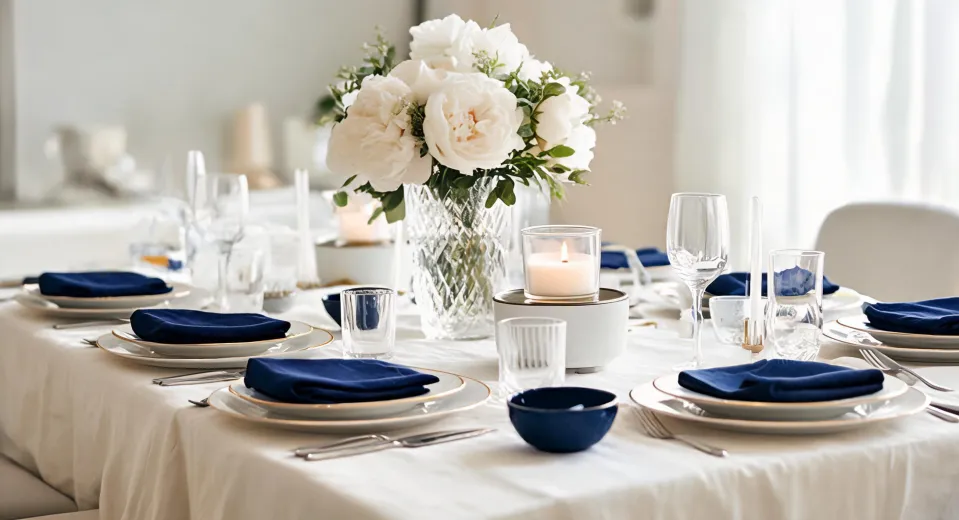
Pick one visual thread and carry it through the box. If you're using Mikasa Firenze, use it as a complete table: a dinner plate, a trinket dish, and a candle holder. Add a folded note, a gift card, maybe a photo frame. The goal is to make the recipient feel like the package was designed for them, not thrown together from leftover inventory.
Don't print 'recyclable' or 'eco-friendly' on the packaging unless you can prove it. Per the FTC's Green Guides (ftc.gov), environmental claims need substantiation. A box may be technically recyclable, but if your local market doesn't accept it, the claim becomes a liability. Same with 'lead-free' on ceramics—more on that below.
5. How does a digital photo frame work in a tabletop gift box?
Let's answer the literal question first. A digital photo frame works by showing image files from internal storage, an SD card, or a connected phone via Wi-Fi/cloud. Most models auto-rotate through a playlist. You can pre-load photos, a welcome screen, or a branded message before shipping.
Now the practical answer: a digital photo frame is a great add-on in a 'Mikasa home' gift set because it fills the personal gap left by inert tableware. But it's not a tabletop product. It's a piece of consumer electronics. So we treat it as an extra, not a core competency. We source from a vetted electronics supplier, test every unit for dead pixels and charging, and buy 5% spares to cover the failure rate of electronics. If a brand says 'we can handle the dinnerware, the frame, and the shipping app all in-house,' I'd ask to see their testing protocol.
6. What's the most common quality issue you see in Mikasa crystal and giftware?
The most common issue I see is packing-related. People assume the factory is where quality fails. In practice, the factory is pretty good; the last-mile courier is not. A crystal vase can pass inspection, then arrive with a hairline crack because it bounced against the side of a cardboard box. We reject items for packaging failures as often as manufacturing failures.
For crystal vases and ornaments, use custom foam or an insert that locks the item in place. Crumpled paper and bubble wrap are not enough for a heavy glass base. Test the actual packed box with a drop from 30 cm. If the line isn't in your contract, it doesn't exist.
To be fair, some production defects do happen: decal wear on gold bands, bubbles in the crystal, and rim chips that hide under a label. That's why we do a 100% visual check on short runs. It's tedious. It's also the difference between a gift and a problem.
7. Should I worry about lead in Mikasa ceramics or crystal?
I can't give you a blanket 'lead-free' statement for every Mikasa item. The truthful answer is that you need to check the product spec sheet for the specific line. The U.S. FDA regulates lead and cadmium in ceramic foodware, so products sold for table use must meet those limits. But 'must meet legal limits' is not the same as 'certified lead-free.' If your corporate client requires lead-free, ask for a lab test report from an accredited lab, not a marketing claim.
Per FTC advertising guidelines (ftc.gov), claims like 'lead-free' have to be substantiated. A supplier who can't produce an XRF test or ICP report doesn't get a pass just because they're a big brand. For crystal, note that traditional crystal can contain lead oxide. Items labeled 'lead-free crystal' are a separate category. Verify the item you're buying.
That's the thing about corporate gifts: the mark you leave is the box they remember. A crack is a bad memory. A misleading claim is worse. Get it in writing, test it, then ship it. Done.

Elise Laurent
Elise Laurent is a crystal and decorative glass quality analyst covering crystal figurines, vases, ornaments, suncatchers, and gift glassware. She examines ISO 6486-1 where food-contact glass dinnerware applies, then uses polarized strain inspection, dimensional checks, surface-defect grading, and refractive clarity to compare decorative pieces outside that scope. Her work helps sourcing teams choose materials, finishing routes, and protective packaging without confusing visual brilliance with verified durability.