Mikasa Dinnerware Sets, Discontinued Vases, and a 36-Hour Corporate Gift Rescue
2026-08-24 · Elise Laurent
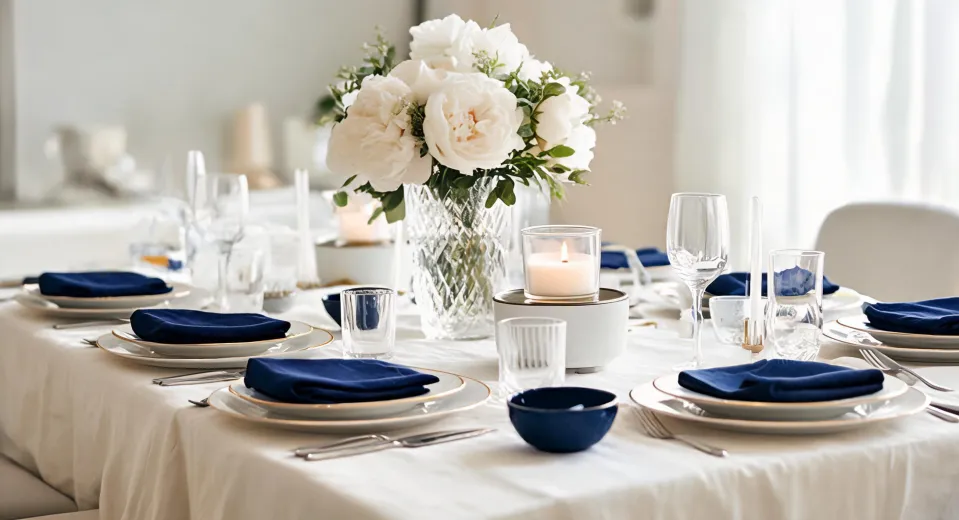
In my role coordinating corporate gift programs for a B2B distributor, I've handled 300+ rush orders over six years, including same-day turnarounds for clients who needed event gifts, closing gifts, and 'please fix this before the CEO sees it' projects. The one that tested most of what I knew about Mikasa happened in March 2024.
The client was a logistics software company headquartered outside Richmond. They wanted 120 gift boxes for their annual leadership summit. Their first idea was full Mikasa dinnerware sets—120 of them. Well, that lasted about a week, once we ran the numbers on packaging, weight, and freight. A full set is heavy, and the boxes had to travel to a hotel ballroom, not to someone's kitchen.
We landed on a place-setting box instead: a Mikasa salad plate, a matching vase, and a Mikasa photo frame with a brushed silver finish. Each box felt like something you'd actually keep on a shelf. That's become the test for a lot of corporate gifts.
The Call That Started It
The event was scheduled for Friday at 6:00 p.m. The call came at 6:00 a.m. Thursday, basically 36 hours before the doors opened. I was still in the parking lot of our warehouse in northern New Jersey.
The client's event planner sounded super tense. 'The hotel says the loading dock won't take the boxes until tomorrow afternoon. Can you deliver by 2:00?'
We could. But that wasn't the actual problem.
Discontinued Mikasa Vases Are a Different Game
The vase in the gift box came from a Mikasa pattern that had been discontinued for years. Sourcing the original 120 took two weeks—or rather, two and a half weeks, if you count the week we spent waiting for a distributor to call us back. We bought 90 from a closeout distributor in Pennsylvania, 22 from a secondary-market dealer in Ohio, and 8 from Replacements, Ltd.
Here's something vendors won't tell you: when a manufacturer discontinues a pattern, the factory's 'no' isn't the final answer. There's a whole secondary market for discontinued Mikasa vases. But it's not fast, and it's not always consistent.
During final assembly on Wednesday night, my team opened every box. That's a habit we adopted after a 2023 incident, and I'm never going back. That's when we found 11 vases with hairline cracks. Not shattered. Just thin cracks that showed when you held the vase up to the light. Unacceptable for a gift table.
We had 36 hours to replace 11 vases from a discontinued line. The client's alternative was sending 11 boxes with no vase and hoping nobody noticed. The table would have looked off. The whole point was consistency.
The options for discontinued Mikasa vases are basically:
- Secondary-market dealers that specialize in retired tabletop patterns
- Closeout reps with dead inventory sitting in a warehouse
- Services like Replacements, Ltd., which stock retired patterns long after the original run ends
I called all three. The Pennsylvania distributor had nothing. The Ohio dealer had two, but they were the wrong finish. Replacements had one, but it was a display piece and they wouldn't ship it.
Then I remembered a closeout rep I'd met at a trade show two years earlier. I called him at 9:15 a.m. 'You're going to think I'm lying,' he said. 'I have 14 of those vases in a warehouse in New Jersey.'
The cost was $18 per vase, plus $320 for a white-glove courier. The original vases had cost us about $12.40 each, give or take. Paying almost double felt bad. Losing a six-figure client's trust would have felt way worse. I put it on my card.
Bone China vs Ceramic vs Porcelain: The Question That Almost Tripped Me Up
While I was on hold with the courier company, the client's head of procurement sent a one-line email: 'Why does the spec sheet say porcelain? We agreed on bone china.'
Honestly, I almost wrote back 'same difference.' It's not.
Ceramic is the umbrella term. Earthenware, stoneware, and porcelain are all ceramics. Bone china is a type of porcelain made with bone ash. Bone ash gives it a warmer ivory tone and a slight translucency. Traditional porcelain is often cooler white and more opaque. All bone china is porcelain, but not all porcelain is bone china.
For this order, the pattern we sourced was porcelain. I had used 'bone china' and 'porcelain' interchangeably in the proposal. The client caught it. That was on me.
One more thing that often gets lost in this conversation: Mikasa is a brand, not a material. They make bone china, porcelain, stoneware, and glass. The name on the stamp doesn't answer the material question.
To be fair, porcelain was the right call for a practical corporate gift. It's strong enough for a desk or an office dishwasher, and it's easier to replace after breakage. Bone china is beautiful, but 'beautiful' isn't the only spec. I should have said that upfront.
Since this is where dinnerware conversations usually go: according to the FDA (fda.gov), ceramic tableware is evaluated for lead and cadmium leaching, and the limits depend on the type of vessel. That applies to bone china, porcelain, and earthenware alike. If a supplier says 'lead-free,' ask for the test report. I'm not going to claim every Mikasa piece is lead-free just because it's a trusted brand. Our purchasing spec included the factory's test results.
The Fix
The courier picked up the vases Thursday evening and delivered them Friday at 9:52 a.m. My team assembled the last 11 boxes by 11:30. The delivery arrived at the hotel loading dock at 1:56 p.m., four minutes before the window closed.
The photo frames, by contrast, were never the problem. Mikasa makes a lot of photo frames, and we had 140 in stock because we use them in other gift programs. The plates were fine too. It was always going to be the vase.
At 7:48 p.m., the event planner texted: 'The table looks beautiful. You saved us.'
What I Learned
Looking back, I should have ordered 15 spares upfront. At the time, 120 exactly seemed safe and budget-friendly. With fragile products, exact counts are a mistake. Now we order a 10% spare buffer on any fragile hero gift, and we confirm two backup sources before we promise a deadline.
This worked because we're a mid-size distributor with a network of closeout reps, secondary-market dealers, and regional warehouses. If you're a small business ordering 10 gift boxes, the calculus might be different. Your risk tolerance should be different too.
The broader point is the one I keep coming back to: what was best practice in 2020 may not apply in 2025. Ten years ago, corporate gifting was basically logo stress balls and branded power banks. Now clients ask for Mikasa dinnerware sets, vases, and photo frames—things that belong on a shelf, not in a drawer. The execution has transformed. But the fundamentals haven't changed. Know who's receiving the gift. Respect the deadline. Have a backup plan.
A corporate gift doesn't need a logo to do its job. It needs to feel intentional.

Elise Laurent
Elise Laurent is a crystal and decorative glass quality analyst covering crystal figurines, vases, ornaments, suncatchers, and gift glassware. She examines ISO 6486-1 where food-contact glass dinnerware applies, then uses polarized strain inspection, dimensional checks, surface-defect grading, and refractive clarity to compare decorative pieces outside that scope. Her work helps sourcing teams choose materials, finishing routes, and protective packaging without confusing visual brilliance with verified durability.