The Real Cost of Corporate Gifting: What Mikasa Dinnerware Taught Me About Recipient Effort
2026-08-24 · Elise Laurent
The First Question Is the Wrong Question
When I first started managing corporate gift purchases for a mid-sized financial services firm, I assumed the safest gift was a recognizable brand. Good china. Crystal. A classic figurine. Mikasa seemed like an easy answer—established name, broad assortment, and enough patterns to make a procurement person look thoughtful.
I was wrong. Not about the brand. About the question.
Everyone asks, "Which pattern should we pick?" But after six years of tracking every invoice in our corporate gift program—and roughly 180 gift orders, give or take a few—the question that actually matters is: What will the recipient do with this after they open it?
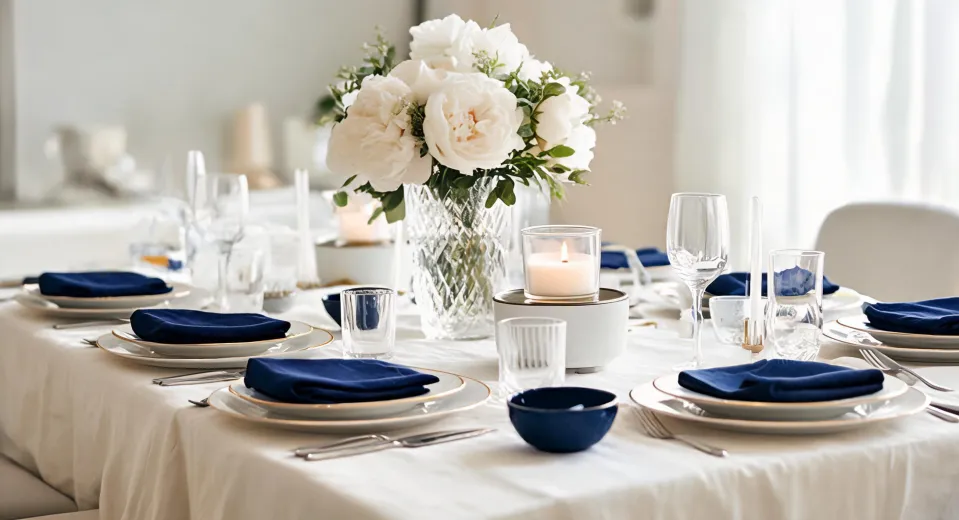
If you're shopping for Mikasa Aspen dinnerware or Mikasa Jolie dinnerware as a corporate gift, the pattern choice is only the surface problem. The deeper problem is whether that gift earns a place in someone's home—or becomes another shiny thing in the back of a cabinet.
The Surface Problem: Which Pattern?
Mikasa Aspen and Mikasa Jolie are two of the patterns that come up often in corporate gifting conversations. Aspen tends to be more understated. Jolie leans more decorative. Both are part of Mikasa's dinnerware assortment, and both fit the "safe, quality gift" category that procurement teams rely on.
I spent my first year comparing those two patterns like it was a life-or-death decision. I'd pull up product photos, compare piece counts, and ask the CFO for her opinion. She'd say "go with the one that looks more expensive." That strategy worked okay until one client sent us a photo of their gift cabinet filled with unopened boxes.
That was the moment the real problem became visible.
The Deep Cause: Gifts Carry a Hidden "Recipient Effort" Cost
Here's the principle I've come to believe after managing multiple gift programs: A gift's value isn't determined by what you pay. It's determined by how much effort the recipient has to invest to appreciate it.
Consider the porcelain figurine. It's beautiful, yes. But it needs a surface to sit on, a style context that matches, and a cleaning routine. If the recipient is a busy operations manager who moves between apartments and doesn't own a curio cabinet, that figurine is a responsibility, not a gift. I'm not saying don't give porcelain figurines—I'm saying the recipient hasn't signed up for the care instructions that come with it.
Same for dinnerware. A 16-piece Mikasa Jolie set is gorgeous. But if the recipient's lifestyle is takeout and a coffee mug, a fine china set is awkward. It forces them to rearrange their cabinets, think about whether it's microwave-safe, and—here's the part I constantly underestimated—find a consistent reason to use it.
Then there's the scented candle. It sounds like the easiest gift: everyone likes a nice candle. But a scented candle in a beautiful jar eventually hits the moment when the wax is gone and there's a layer of leftover wax stuck to the bottom. And that's where the hidden cost shows up.
The Candle Jar Problem Is Not About the Candle
From a recipient's view, "how to empty candle wax from jar" isn't a niche problem—it's the moment a gift turns into a chore. If they try to scrape it out with a knife, they risk scratching the glass. If they pour boiling water in, they risk cracking a cold jar. If they stick it in the freezer, they need to wait and pry. Some recipients just throw the jar away. That's a wasted gift container—and if the candle was part of a branded corporate gift, that's wasted brand exposure.
Funny thing: I never thought about any of this when placing our first bulk candle order. I was focused on scent notes and burn time. The recipients, I assumed, would figure it out. Many didn't.
I'm not a candle chemist or a thermal safety expert, so I won't claim to know every jar is heat-safe. What I can tell you from a procurement perspective: if the gift requires the recipient to look up a "how to" guide, the gift design has a flaw. You're giving them homework.
The Real Cost of "Did They Like It?"
This is where the cost-controller part of my brain takes over.
Let's say you order 50 scented candles at $45 each. That's $2,250. If 20% of those candles end up with jars that get thrown away or left sitting empty with wax residue, you've lost value on 10 items. That's not $450 in sunk product cost—it's 10 missed opportunities to keep your brand on someone's shelf. The jar was the billboard. Once it's in the trash, the message is gone.
Same with dinnerware and porcelain figurines. If the set sits unused in a closet, the cost of goods was only the beginning. You paid for shipping, gift wrapping, maybe a handwritten note. All of that effort is locked up in a box that makes the recipient feel guilty every time they see it. That's not a gift; it's an obligation.
I struggled with this math for a long time. The upside of choosing a "safe" brand was low risk. The risk was that "safe" becomes invisible. I kept asking myself: is a generic premium gift worth potentially becoming clutter? Turns out, the answer is often no.
The Solution: Think Like a Recipient, Not a Buyer
I don't have a magic formula. But after comparing dozens of options and burning through more than one budget cycle, here's the short version of what works:
- Choose gifts with a clear "next step." A scented candle is nice, but pair it with a candle care card that explains how to empty the wax and repurpose the jar. A dinnerware set is nicer when the card includes serving ideas, not just warranty language.
- Favor items that fit into daily routines. That's why photo frames and mugs and coffee table books often perform better than formal china sets—unless the recipient has explicitly asked for formal china. Your sales team knows the difference. Ask them.
- If you're set on fine china, make it functional. Mikasa Aspen and Mikasa Jolie are both lovely, but consider gifting starter sets (four place settings, not eight) or pairing them with everyday-use pieces like serving bowls. The goal is to invite use, not storage.
- For porcelain figurines, respect the recipient's space. A figurine is a commitment to a shelf. If you know the person collects them, go for it. If you don't, choose a smaller piece or something that can be displayed on a desk without a lot of thought.
For the candle jar question specifically, the freezer method—freeze the jar for a few hours, then press the wax disc out—is the one that works most often in our office. But check the jar before any warm-water method. I'm not a safety engineer, and the label knows more than I do.
The common thread: lower the effort it takes to say yes to your gift.
Our procurement policy now includes a simple question on every gift order: "What will this person do with this three months from now?" If we can't answer that, we don't buy it. It sounds obvious. It took me far too long to get there.
That's the part I wish someone had told me when I was staring at two Mikasa patterns and a budget spreadsheet. The pattern matters, but not as much as what happens after the ribbon comes off. Give something that fits into a real life, and you'll get more value for every dollar. That's the total cost of ownership I actually care about.

Elise Laurent
Elise Laurent is a crystal and decorative glass quality analyst covering crystal figurines, vases, ornaments, suncatchers, and gift glassware. She examines ISO 6486-1 where food-contact glass dinnerware applies, then uses polarized strain inspection, dimensional checks, surface-defect grading, and refractive clarity to compare decorative pieces outside that scope. Her work helps sourcing teams choose materials, finishing routes, and protective packaging without confusing visual brilliance with verified durability.