The Real Problem With Mikasa Gift Orders (And the Checklist That Finally Fixed It)
2026-08-25 · Elise Laurent
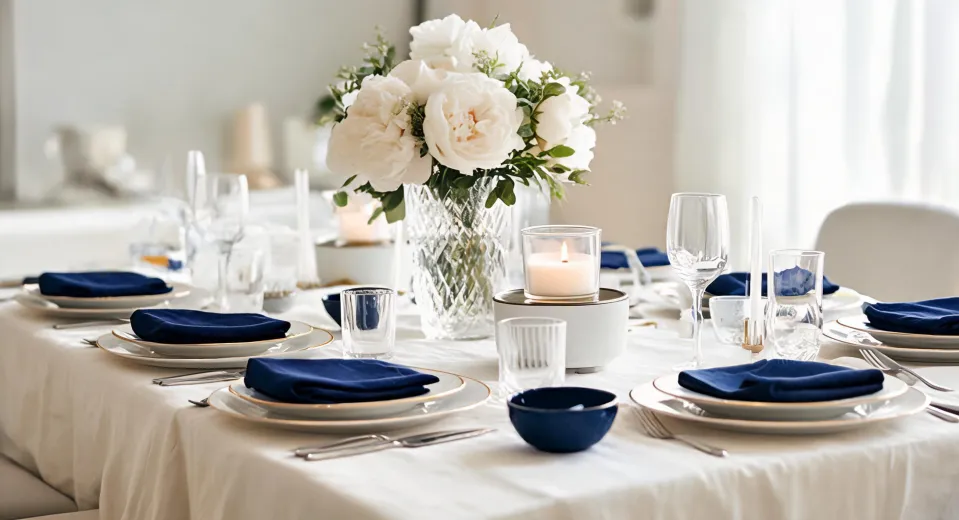
In September 2022, I opened the first box of a 48-box Mikasa Audrey dinnerware order and found 11 broken dinner plates. That's 11, not one. The bad part? It wasn't the courier's fault. It was mine.
I've handled corporate gift and branded merchandise orders for six years. I've personally made—and documented—14 significant mistakes, totaling roughly $7,800 in wasted budget. I'm not a consultant. I'm the person who maintains the checklist so our team doesn't repeat my errors.
The Surface Problem: Which Mikasa Pattern Looks Best?
A lot of buyers think the challenge is taste. It isn't.
When a client says they need corporate gifts, the conversation usually starts with 'Which Mikasa product should we buy?' Audrey dinnerware? A nativity set? A tea set? A picture frame? Every time, the visible question is about taste. The real problem is what happens after the selection.
The Deeper Problem: You're Buying a Gift Lifecycle, Not a Product
Here's the thing: a corporate gift is not a product. It's a life cycle—from order to delivery, to replacement, to 'what does the client actually do with this after a year?' Too many buyers skip that last part. I did.
Your logo color is a spec too. I once asked a vendor for 'navy blue' and got a shade that sat somewhere between navy and purple. It wasn't their fault. I didn't give them a PMS number. When a corporate logo on a gift matters, the industry standard color tolerance is Delta E < 2 for brand-critical colors. Delta E of 2-4 is noticeable to trained observers; above 4 is visible to most people. Reference: Pantone Color Matching System guidelines.
Mikasa Audrey Dinnerware: Breakage Is a Specification, Not an Accident
Audrey is a popular pattern. It's a safe choice—clean, classic, and easy for a client to say yes to. But 'safe' doesn't mean 'zero risk.' The risk is breakage. In 2022, I ordered 48 place settings. I checked the stock myself, approved the spec, processed the order. Then I realized I'd underestimated breakage. I thought a 2% allowance was fine. The actual discard rate on that shipment was just under 9%.
I said 'we need enough for 48 employees.' My team heard '48 pieces.' We were using the same words but meaning different things. We discovered this when the first box opened and plates were already cracked. We didn't have a formal replacement process. The third time a recipient reported a chip, I finally created a breakage buffer rule: 10% spare inventory for any dinnerware order over 20 place settings.
Also, check whether the pattern is open stock. According to Replacements, Ltd. (replacements.com), discontinued patterns can often be sourced in limited quantities, but 'limited' doesn't help you when a client needs to match a service for 12 in March. If your client wants to add pieces later, get the pattern's long-term availability in writing before you commit.
Mikasa Nativity Set 3 Piece: Seasonal Timing Is a Liar
The Mikasa nativity set 3 piece is a beautiful holiday gift. It's also a trap. I learned this in October 2024, when we quoted it for a cosmetics client. The client approved on November 1. We needed 60 units by December 10.
The upside was a nice $6,200 order. The risk was missing the window. I kept asking myself: is $6,200 worth potentially disappointing a repeat client? But with the CEO waiting, I made the call with incomplete information.
What I didn't know: seasonal inventory was already low. Three weeks later, the supplier had 14 units left. We rushed the remaining stock from a secondary source, paid more, and still had to stagger deliveries. The client was gracious. But the grace wasn't free—it was a 30-minute apology call, a discount, and a dent in the relationship.
If you're buying the Mikasa nativity set 3 piece for a holiday client, confirm availability with a human before quoting. Don't trust the website's low-stock timer. That's a decision for now, not later.
Picture Frame: 'Safe' Is Not the Same as 'Good'
Photo frames are the default 'safe' corporate gift. I've ordered too many of them. The mistake that finally fixed me was assuming the recipient would have a photo in the right size.
We ordered 8x10 frames with a company logo engraved in the corner. Nice. Except most people's favorite photos are 4x6 or 5x7. The recipients had to order prints to fit the frame—or some just left the frames empty. That's a bad gift: an obligation, not a gesture.
Now I ask one question before any picture frame order: What will the recipient put inside? If the answer is 'I don't know,' choose a frame that fits a standard 4x6 or 5x7 photo, or include a matching print.
If you're custom-printing a photo insert or logo mat, standard commercial print resolution is 300 DPI at final size. A 3000x2000 pixel image at 300 DPI prints about 10 by 6.67 inches. We printed a logo from a 900-pixel-wide image. It looked fine on screen, pixelated on paper. That error cost $890 in redo plus a one-week delay.
Tea Set: The Packaging Budget Is the Budget
Tea sets are delicate by design. If you're buying a Mikasa tea set as a client gift, the product cost is only the beginning.
In Q3 2024, I ordered 30 tea sets for a corporate anniversary. I negotiated the per-unit price like a hero. Then I realized I'd allocated almost nothing for protective packaging and insurance. The sets arrived intact this time. But the freight and repacking cost added 18% to the total. I had to explain to my CFO that the per-unit price was real, but the total cost per gift was 30% higher than the catalog price.
For fragile gifts, build the full landed cost before comparing options. A tea set that can't survive a typical courier route will survive only one shipment—the one you blame the courier for. The second one is on you.
The Cost of Ignoring the Real Problem
Let me sum up my education in dollars:
- 11 broken plates in a 48-place-setting Mikasa Audrey order: $620 in replacements plus $180 in rushed freight.
- Seasonal nativity set shortage: $1,150 extra for partial expedited inventory.
- Photo frame size mismatch: $340 in reorders and a client who didn't reorder.
- Tea set packaging surprise: $470 over budget.
Total: $2,760 in direct costs, plus a 1-week delay, plus trust I won't get back. Add smaller reshipments, wasted samples, and one truly unnecessary rush order, and my documented total crossed $7,800. The biggest cost wasn't the money. When a gift breaks or doesn't fit the recipient's life, it reflects on the person giving it, not the manufacturer.
The 'Is Paint by Number Free?' Question
A client once asked me, 'Is paint by number free?' I thought they meant money. They didn't. They meant rights.
No: if you're using a paint-by-number template for corporate giveaways, you need to check the license. Many free templates are free for personal use only. Commercial use—like a branded team-building event with a company logo printed on the kit—often requires a paid license. I read the fine print on one 'free' site, and it prohibited reproducing templates in a business context. Good timing, because I almost told a client 'yes, just use any template.'
If a paint-by-number kit has your company logo, it's not free. The design might be affordable, but 'free' and 'free for commercial use' are different things. I'd rather explain that now than have a client receive a trademark or copyright letter later.
The Checklist That Would Have Saved Me $7,800
- Ask 'what happens after the gift is handed over?' before choosing the product.
- For dinnerware: add 10% breakage buffer. Verify open-stock availability first.
- For seasonal items like the Mikasa nativity set 3 piece: confirm stock with a person before quoting.
- For picture frames: pick the recipient's photo size first. Use 300 DPI for any custom print.
- For tea sets: calculate the full landed cost—packaging, freight, insurance—before comparing prices.
- For any 'free' design template: read the license. If it's commercial use, get it in writing.
An informed customer asks better questions and makes faster decisions. I'd rather spend ten minutes explaining this than deal with a broken gift, a missed deadline, or a licensing headache later.
This was accurate as of Q4 2024. Product availability and pricing change fast, so verify current stock before quoting anything.

Elise Laurent
Elise Laurent is a crystal and decorative glass quality analyst covering crystal figurines, vases, ornaments, suncatchers, and gift glassware. She examines ISO 6486-1 where food-contact glass dinnerware applies, then uses polarized strain inspection, dimensional checks, surface-defect grading, and refractive clarity to compare decorative pieces outside that scope. Her work helps sourcing teams choose materials, finishing routes, and protective packaging without confusing visual brilliance with verified durability.