The $60 Candle Mistake That Almost Ruined a Mikasa Wedding China Event
2026-08-07 · Elise Laurent
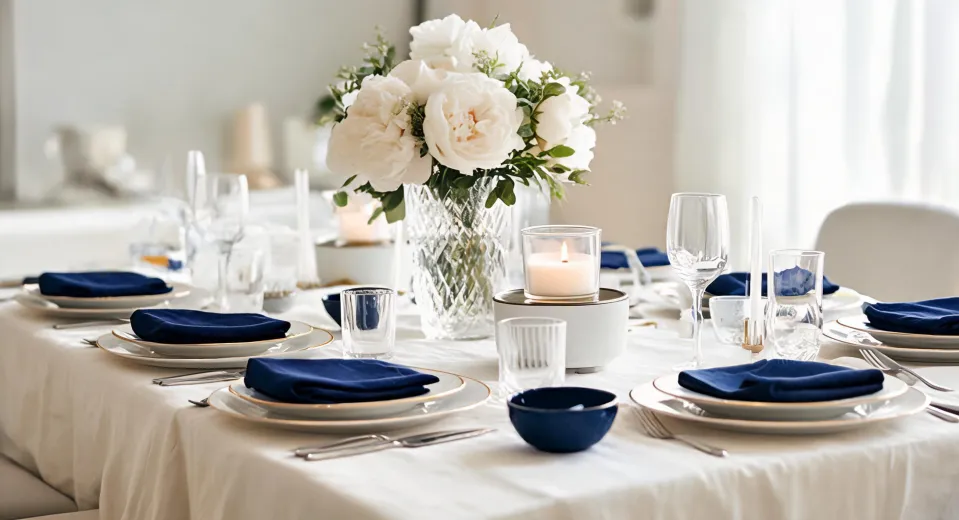
At 10:30 PM on a Friday, I was standing in an empty banquet hall, staring at a jar candle with wax hardened against the sides of the glass like it had made up its mind to stay. In six hours, the wedding coordinator would arrive. In eighteen hours, the first guests would sit down. And if I couldn't fix those candles, the entire premium feel of the room — the Mikasa wedding band china, the ivory bone china Mikasa dinnerware, the crystal gift sets at every place setting — would be quietly undercut by one of those details that shouldn't matter but does.
In my role coordinating corporate gifts and event supplies for a boutique gifting company, I've handled 80+ rush orders over the past four years. I've arranged same-day turnarounds for clients who thought they'd lost a whole week of lead time. But this was the first time a candle nearly took down a $40,000 event.
How We Got Into This Mess
Three weeks earlier, a long-time corporate client asked us to design the reception for her daughter's wedding. She wanted Mikasa wedding band china at the head table — that classic white-and-gold rim pattern that photographs beautifully. Ivory bone china Mikasa dinnerware for the guest tables. Crystal gift sets for the bridal party. And, as centerpieces, jar candles nestled inside Mikasa crystal candle holders.
The china and crystal were easy. We've worked with the Mikasa catalog for years, and the wedding band pattern is one of our most requested lines for upscale events. The ivory bone china Mikasa collection has a warm, translucent quality that reads as high-end both in person and in photos.
The candles were the problem.
I went back and forth between two suppliers for about a week. The first offered premium jar candles — thick glass, even-burning wicks, the kind of product that looks intentional. The second was half the price, and their product photos looked suspiciously similar. The numbers said the budget option made sense. My gut said something was off, but I couldn't articulate what. The responsiveness difference should have been the clue — the premium supplier replied within hours, the budget one took four days.
I went with the budget supplier anyway.
The Photo That Changed the Night
At 9:00 PM the Friday before the wedding, the venue coordinator sent six photos with a one-line text: "You need to see these." She'd lit the trial candles during the rehearsal dinner. Three hours of burning later, five of the six had tunnelled — the wax melted straight down the center, leaving thick walls of unmelted wax pressed against the glass. Two were smoking.
My first thought was the smoke smell. My second was worse.
The wedding photographer would arrive at 2:00 PM. She would shoot every table setting — the gold rim on the Mikasa wedding band china, the delicacy of the ivory bone china Mikasa plates, the crystal gift boxes stacked beside each napkin. And in every wide shot, those ugly half-melted candles would sit there like a stain on a white tablecloth.
From the outside, this looks like a routine supply problem. The reality is a perception problem. When a client invests $40,000 in china and crystal, every single element on the table sends the same message: "This event is premium." A cheap, smoking candle doesn't just look cheap — it makes the expensive items around it feel cheaper by association. That's how quality perception works. It's not rational, but it's relentless.
The Rescue Operation
I had two options. Option one: drive across town to an open-late gift shop and spend $90 on premium replacements. Option two: salvage the remaining candles by melting the leftover wax and resetting the wicks. I did both.
The gift shop stop covered the two candles that were too far gone to save — their wicks had burned down to stubs, and the wax had absorbed too much smoke smell. The remaining four were salvageable.
If you ever need to melt the remaining candle wax from a jar candle, here's the method that worked for me:
- Preheat the oven to 175°F. Not 200, not 150 — 175. Glass cracks if you push it.
- Place the jar candles on a baking sheet. Heat for 8–10 minutes until the leftover wax liquefies.
- Pour the hot wax into a heat-safe container you're willing to throw away. (Should mention: never pour melted wax down the sink; it hardens and clogs pipes.)
- Wait about 30 minutes until the wax is just barely setting. Push a new pre-tabbed wick through the center. You can find them at any craft store.
- Let everything set for at least 2 hours. Test-burn for 30 minutes before you trust it with actual guests.
This technique works maybe 60% of the time, give or take. It depends on the wick length and how much smoke the wax has absorbed. Out of six candles, we salvaged four. The $60 we saved choosing the budget supplier ended up costing $90 in replacements, 40 minutes of driving, and three hours of sleep.
Missing that mark would have meant the client finding cheap, smoking candles in her wedding photos — a permanent reminder of a detail we'd let slide. That was the real stakes. It made the $90 feel like the deal of the century.
The Wedding Day
The reception went flawlessly, at least where the details were concerned. The Mikasa wedding band china caught the chandelier light in a way that made the head table look like a magazine spread. Several guests asked where they could buy the ivory bone china Mikasa plates. The crystal gift favours were gone within the first hour, which never happens.
And nobody noticed the candles. That was exactly the point. When everything works, details are invisible. When they don't, they're unforgettable.
A few weeks later, I asked the client how the reception felt. She said it was "exactly as she'd imagined." She's re-booked us for a corporate event in March. I'm fairly sure it's because nothing on those tables gave her a reason to question our judgement.
I should note, though: my experience here is based on roughly 80 premium events in the $20,000–$60,000 range. If you're organizing a smaller gathering or working with a tighter budget, your priorities may be different. I can't speak to how these principles apply in those contexts.
The Lesson
What I tell my team now is simple: quality perception is cumulative. Every element of an event contributes to a guest's overall impression — the china, the crystal, the candles, the linens, even the lighting. When everything aligns, the event feels expensive without anyone being able to say exactly why. But one out-of-place detail breaks the spell.
I've also stopped thinking about savings in isolation. The $60 I saved on candles ended up costing me $150 once I factored in emergency replacements and labor. The cheapest option is rarely the cheapest once you count the risk. In my opinion, that holds true across most of event planning.
One more practice I've adopted since that night: I always request test samples for anything that burns, melts, or breaks. I don't hold vendors to this as a universal rule — I understand that budgets exist — but for premium events, it's non-negotiable. I now budget candles at about 5–10% of the china line item. It's not a markup; it's insurance. As of January 2025, that's the standard I operate by.
If you're dealing with leftover wax right now, the oven method above is the most reliable way to melt the remaining candle wax from a jar. But the honest advice is: buy candles that burn evenly in the first place. Quality perception starts before the flame is even lit.

Elise Laurent
Elise Laurent is a crystal and decorative glass quality analyst covering crystal figurines, vases, ornaments, suncatchers, and gift glassware. She examines ISO 6486-1 where food-contact glass dinnerware applies, then uses polarized strain inspection, dimensional checks, surface-defect grading, and refractive clarity to compare decorative pieces outside that scope. Her work helps sourcing teams choose materials, finishing routes, and protective packaging without confusing visual brilliance with verified durability.