Mikasa Bone China Isn't an Upsell—It's a Total-Cost Decision for Corporate Gifts
2026-08-19 · Elise Laurent
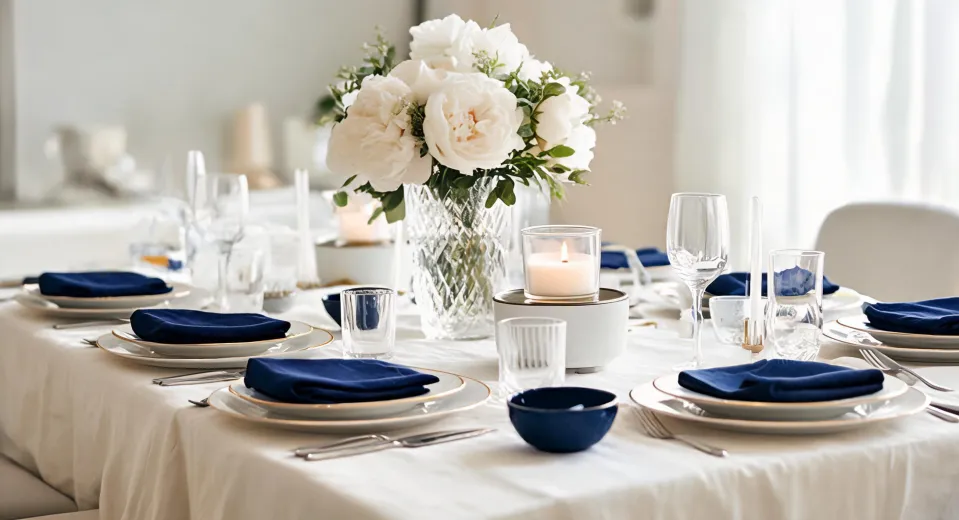
Mikasa bone china is not the place to cut corners in a corporate gift program. I realize that sounds like a brand pitch, but I’m a quality compliance inspector, not a salesperson. At our tableware and gift distribution company, I review every inbound order before it reaches a customer—roughly 200 unique items a year. I’ve rejected shipments for things most buyers never see: a hairline crack under a teacup handle, a decal that’s off by 1.5 mm, a crystal foot that makes a vase rock when you put a rose in it. After four years of this, I can tell you honestly: the cheapest quote is almost never the cheapest shipment.
Here’s the mental shift I wish every purchasing manager would make. Stop comparing unit prices. Start comparing total cost: the purchase price plus inspection time, replacement freight, repacking, expedite fees, brand risk, and the cost of your client’s disappointment. In short: total cost of ownership, or TCO.
Why Unit Price Is Only the Beginning
When a client asks me to evaluate two quotes—one unbranded import at $18 per dinnerware set and one Mikasa Arabella dinnerware set at $32—most accounting looks at the $14 difference. As the guy who has to open every carton, I look at what happens after the invoice.
In Q1 2024, we tested a line of unbranded bone china for a prospective wholesale program. The sample looked beautiful. The bulk shipment didn’t. We rejected 7% of the lot for glaze defects and uneven rims. That added two weeks and $1,100 in freight for replacements. The “cheaper” supplier suddenly wasn’t cheaper. Meanwhile, our internal quality audit for Mikasa bone china orders in 2024 came back with a defect rate under 1%. That’s not a marketing claim; it’s my receiving log.
With Mikasa Arabella specifically, we see very few rim chips. The glaze is consistent. The edge pattern lines up. That matters because corporate gifts go straight from the box to a client’s dining room. There is no return-and-exchange process that doesn’t embarrass you.
A Tea Set Is a Relationship Asset, Not a One-Time Expense
A corporate gift that sits in a cabinet for five years isn’t really a gift; it’s clutter. But a well-made tea set gets used. And every time it’s used, your client’s team remembers who sent it. A cheap set that chips after three washes becomes a reminder that you chose to save $12. That is terrible total-cost math.
I have mixed feelings about corporate gifting in general. On one hand, it feels like an old-fashioned expense that budget committees love to cut. On the other, in our customer retention data, clients who receive a thoughtful, quality gift renew at a noticeably higher rate. The “cost” of that renewal is the moment the client opens the box. If the tea set is cracked (we’ve seen that, unfortunately), the renewal conversation starts with an apology.
That’s why I’d rather buy 50 Mikasa bone china tea sets than 100 unbranded ones. The goal is not to have your logo in as many hands as possible. The goal is to have your logo associated with quality. Buy fewer, buy better, and the total cost per retained relationship goes down.
The Counterintuitive Cost: Timing
Here’s the argument that changes my purchasing mindset more than any unit-price comparison: total cost includes the calendar.
Take holiday gifts. If you’ve ever searched for “when to set up nativity scene,” you know there’s no single official date. Some families put their nativity scene out the day after Thanksgiving. Others wait until the Feast of the Immaculate Conception. Many don’t set it up until Christmas Eve. The point is, if you’re sending an angel figurine or a nativity-themed gift, your client’s set-up date is an unknown. The upside of sending a lovely piece is a warm feeling. The risk is the gift arriving after the recipient has already decorated—which makes it feel like leftover inventory, not a gesture.
Last year, our purchasing manager wanted to save $180 by using standard ground shipping on a corporate order of angel figurines. I pushed for expedited delivery. The order arrived November 20—two days before the client’s team planned to assemble their holiday display. So glad I insisted. Almost went standard, which would have meant the pieces arrived after they had already chosen their decor. That $180 “savings” would have cost us a lot more than $180.
Set-up date isn’t something you’ll find in a procurement manual. But it’s exactly why the “when to set up nativity scene” question matters for B2B gift buyers. The true cost of a late shipment isn’t the refund. It’s the silence after the client opens your apology email.
What About the CFO Who Wants to Save?
I know what some of you are thinking: “You’re a quality inspector, so of course you care about quality. But for a simple thank-you gift, can’t we just get something cheap and presentable?”
Here’s my answer: I’ve seen what “presentable” looks like after twenty days in a warehouse and one rough shipping ride. It looks like a broken angel wing wrapped in bubble wrap. The buyer didn’t plan for that. The box looked fine from the outside. But the piece inside was destroyed, and the recipient now thinks your company sends broken gifts.
Even when nothing breaks, there is the risk of subtle defects. A slight roughness on a cup rim. A color mismatch between the sample and the production run. With Mikasa, patterns are consistent enough that I can sign off on a batch without opening every single piece. With an unbranded import, I can’t. That is a real cost of my time—but it’s small compared to the time my account manager spends resolving a complaint.
I’m not saying every budget needs gold-trimmed porcelain. But a corporate gift’s job is to make the recipient feel valued. A chipped base or a crooked decal tells them they were worth less.
My Bottom Line
So here’s the practical rule I give to every purchasing team I work with: calculate the total cost before you compare brand names. Add the price, the inspection time, the replacement rate, the shipping risk, the seasonality, and the damage to your reputation if the gift fails. When you do that, Mikasa bone china often isn’t the premium option—it’s the responsible one. The Arabella dinnerware, the tea sets, the angel figurines, the crystal vases: they’re not the luxury choice because they’re pretty. They’re the practical choice because they arrive intact, look right, and make your company look like a company that pays attention.
That’s the total-cost thinking that has saved me more headaches than it has cost me dollars. Trust me on this one—or ask the client who still keeps that Mikasa vase on her office shelf eleven years later.

Elise Laurent
Elise Laurent is a crystal and decorative glass quality analyst covering crystal figurines, vases, ornaments, suncatchers, and gift glassware. She examines ISO 6486-1 where food-contact glass dinnerware applies, then uses polarized strain inspection, dimensional checks, surface-defect grading, and refractive clarity to compare decorative pieces outside that scope. Her work helps sourcing teams choose materials, finishing routes, and protective packaging without confusing visual brilliance with verified durability.